The best siding for snow, ice, & freezing temperatures
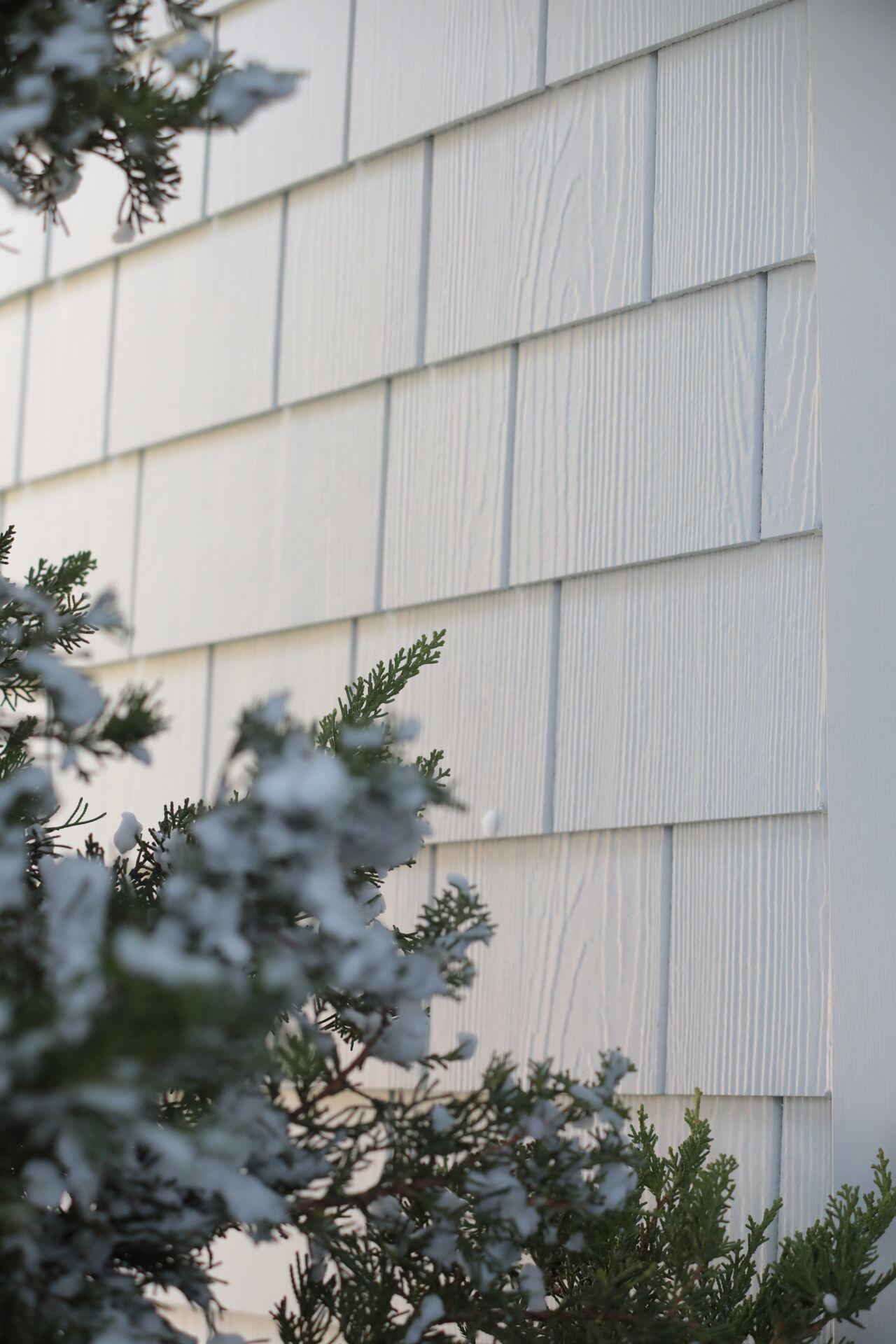
Winter is relentless in many parts of North America. From the upper Midwest and New England to the Rocky Mountain states and Canada, the weather conditions here do more than make roads hazardous — they put your home’s exterior to the test year after year.
Siding that performs beautifully in mild conditions can crack, warp, buckle, and absorb moisture when temperatures swing dramatically between day and night. Choosing the wrong siding material can mean costly repairs, diminished curb appeal, and ongoing maintenance headaches. Choosing the right one, however, helps your home stay resilient and beautiful for years — no matter what winter brings.
Explore why certain siding materials excel or fail in cold climates, and why Hardie® Fiber Cement Siding stands apart as a resilient choice for snow, ice, and freezing temperatures.
Choosing the right siding for cold climates
Your home’s siding is a first line of defense against the elements. In cold climates, that defense is constantly challenged. Snow load, ice formation along roof edges, wind-driven moisture, and the daily expansion and contraction caused by freezing and thawing temperatures all put pressure on exterior materials.
Selecting a siding material engineered to withstand these specific conditions is essential for protecting your home. The wrong choice can lead to:
- Water infiltration behind the siding
- Mold growth
- Premature paint or finish failure
- Structural damage over time
The right choice can help deliver decades of low-maintenance beauty and dependable durability to your home.
Regions often affected by snow, ice, and freeze-thaw cycles
Harsh winter siding challenges aren’t limited to the far north. While states like Minnesota, Michigan, Wisconsin, and New York regularly top the list for snowfall and extended cold, freeze-thaw cycles are common across a much broader range of locations. Homeowners in the following regions should pay particular attention to their siding's performance:
- The Upper Midwest
- The Northeast and New England
- The Rocky Mountain and Pacific Northwest states, particularly at higher elevations
- The Great Plains
- Most of Canada
How snow, ice, and freezing temperatures affect building materials
Not all siding materials age the same way in cold climates. Understanding the specific failure points of different materials helps illustrate why the composition of your siding is so critical.
- Cracking and splitting: When water penetrates a porous siding material and then freezes, it expands, causing tremendous internal pressure. Over time, repeated freeze-thaw cycles can cause cracking and splitting.
- Water infiltration: Swelling and edge checking occur in wood-based products as they expand and contract in response to changes in weather. Moisture-compromised seams and joints serve as entry points for water, which can then freeze within the wall cavity, leading to mold growth.
- Snow load stress and ice accumulation: Heavy snow accumulating against the siding creates physical pressure and introduces sustained moisture exposure.
- Expansion, contraction, and fading: All materials expand and contract with temperature changes, but materials with high rates of dimensional movement are more prone to joint failures, finish cracking, and visible separation over time. Additionally, harsh UV exposure during clear winter days, combined with reflective snow glare, can accelerate color fading.
Key siding features for cold-climate homeowners to consider
When evaluating siding materials for a cold-weather home, several key performance attributes should guide your decision.
- Moisture resistance and water management: The single most important attribute for cold-climate siding is its ability to resist moisture absorption. A material that repels water rather than absorbing it is far less susceptible to freeze-thaw damage.
- Freeze-thaw cycle durability: Look for products that have been tested specifically for freeze-thaw conditions and demonstrate minimal dimensional change, cracking, or degradation over time.
- Material composition: Organic materials like wood are naturally prone to moisture absorption, swelling, and biological degradation. Inorganic or composite materials engineered for dimensional stability offer superior resilience in harsh climates.
- Proper drainage: Good siding design incorporates installation methods that encourage water to drain away from the wall assembly rather than sitting against the cladding.
- Insulation compatibility: Cold-climate homes benefit from continuous insulation systems beneath the siding layer. Choose a siding material that is compatible with insulated sheathing systems and that maintains its performance characteristics even when installed over varying substrate conditions.
- Durable color finish: A factory-applied, fully cured, and engineered-for-exterior-performance finish will maintain its appearance far longer than on-site-applied paint.
The case for Hardie® Fiber Cement
When properly installed, Hardie® products provide long-term durability for homes in cold-weather climates while delivering pleasing aesthetics and curb appeal. Hardie® Fiber Cement is rated FEMA Class 5 for flood damage resistance, the highest rating available — and only Hardie® products are Engineered for Climate® using the Hardie™ Zone System.
Hardie™ Zone System provides siding with specific performance attributes relative to the climate where the product is being used. As a result, James Hardie gives you the ability to put the optimum siding on a project regardless of your location.
- HZ5® is suitable for cold, wet winters, ice, and snow — specifically developed for performance in cold-weather climates
- HZ10® defies blistering sun, hurricane-force winds*, and sheets of rain
In addition to resisting damage from external fire, moisture, extreme weather, and pests, Hardie® Fiber Cement siding is backed by a 30-year non-prorated limited substrate warranty. Products with ColorPlus® Technology finishes are also backed by a 15-year limited finish warranty covering peeling, cracking, chipping, and premature fading.
ColorPlus® Technology finishes are factory applied in a controlled environment and cured onto the board for a strong bond. The finish is engineered to provide exceptional adhesion along with resistance to cracking, peeling, chipping, and fading — making it a low-maintenance choice for homeowners.
Siding material performance comparison in cold climates
Comparing siding materials across key performance factors helps homeowners in cold climates understand how different material options respond to environmental stresses. While each siding material has advantages, homeowners seeking durability across multiple climate conditions often consider fiber cement siding the most reliable option.
- Wood: Susceptible to swelling, warping, and rot in damp, moist conditions.
- Fiber Cement: Engineered to resist moisture and rot; FEMA Class 5 Damage Resistance Flood Rating.
- Vinyl: Doesn’t absorb water but can be brittle and crack at low temperatures. Less resistant to high winds and hail with a lower wind load rating than fiber cement.
- Stucco: Susceptible to cracking as building settles, allowing water infiltration and potential wall damage. Prone to cracking as building settles.
- Engineered Wood: Expands and contracts with moisture; requires a gap at butt joints to accommodate movement.
- Solid-Core PVC: Engineered to resist moisture and rot.
Keep your cool through cold weather
Living in a cold-weather climate doesn’t have to cause anxiety about your home’s exterior. With the right siding that's formulated for cold climates, you can face every season with confidence.
Hardie® offers a variety siding, trim, and soffit profiles — in multiple design styles, colors, and textures to match your home’s character. Learn more and request a quote from a local contractor, or if you’re not quite ready, get our informative Re-side Roadmap for a step-by-step guide to selecting the right siding for your home.
*Rated for use in High Velocity Hurricane Zones (HVHZ) by Miami-Dade County Florida, among the nation's most stringent extreme weather regulations. HVHZ rating solely applies to select products.
**Hardie® fiber cement products are noncombustible and/or have a Class A fire rating when tested in accordance with ASTM E84. Fiber cement fire resistance does not extend to applied paints or coatings, which may be damaged or char when exposed to flames. The use of noncombustible siding, combined with other fire mitigation measures, may help harden a home against external fire
