The best siding for Midwest weather: Why Hardie® Fiber Cement stands out
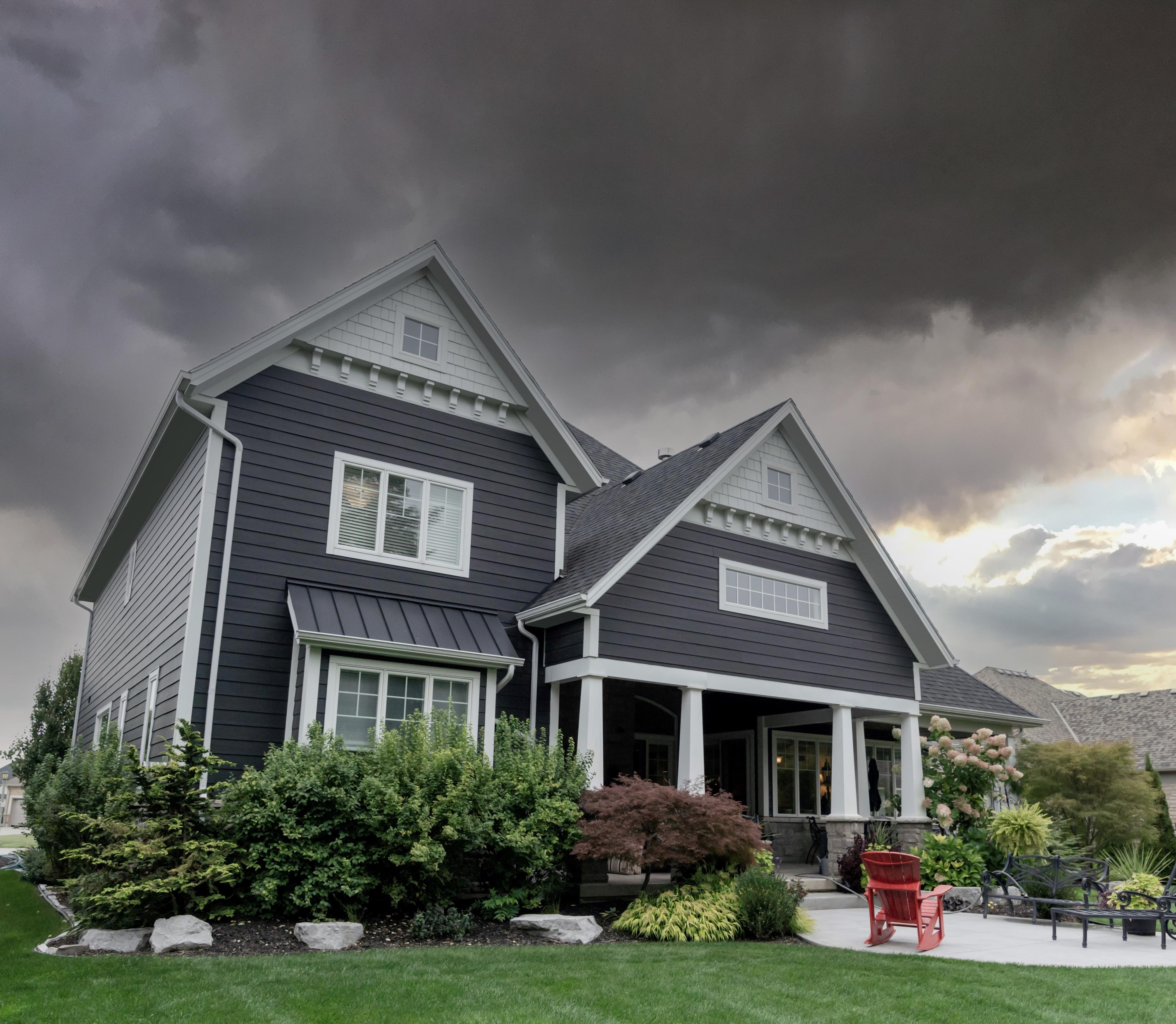
The Midwest doesn’t do anything halfway when it comes to weather. Within a single month, a home in Ohio, Illinois, or Minnesota might face subzero chills, severe thunderstorms, sweltering humidity, and whipping winds. For homeowners in this region, choosing the right siding material is both an aesthetic and structural decision.
The right siding material needs to be built for this intensity. It should resist moisture without swelling, hold its color under intense UV exposure, stand up to hail and high winds, and never flinch at a hard freeze.
Hardie® Fiber Cement Siding is Engineered for Climate® to meet these demands, using the Hardie™ Zone System to ensure that homes in the Midwest get products formulated specifically for their climate. To understand what makes siding succeed or fail in the Midwest, let’s explore the challenges these materials face — and why Hardie® Fiber Cement stands out as an ideal choice for housing in this region.
Understanding Midwest weather conditions
- Winters across the Midwest regularly bring prolonged freezing temperatures, heavy snowfall, and ice storms that subject siding to repeated freeze-thaw cycles.
- Spring arrives with its own challenges: heavy rainfall, rapid temperature swings, and humidity that spikes sharply as the ground warms and thaws.
- Summers in much of the Midwest are hot and humid, with intense UV exposure and the ever-present threat of severe storms, large hail, and damaging winds.
- Fall brings drier conditions but also dramatic temperature variability that accelerates expansion and contraction in exterior materials.
How do Midwest weather conditions affect a home’s exterior?
Each season brings a distinct set of threats to your home’s exterior, and over time, those threats compound. Siding that performs reasonably well in mild conditions often shows its limitations quickly in the Midwest. Let’s explore each of these challenges.
- Freeze-thaw cycles are among the most destructive forces a siding material can encounter. When moisture infiltrates a porous material and then freezes, it expands, creating internal pressure that eventually causes cracking, splitting, or delamination.
- High humidity in summer introduces ongoing moisture pressure that can cause wood-based materials to warp or rot and create the perfect conditions for mold growth behind the siding layer.
- Hailstorms, which are common throughout tornado alley and the broader Midwest, can crack or dent vinyl and wood products. Vinyl siding is more susceptible to damage from hail and may crack, buckle, or sag as a result of extreme temperature changes.
- High winds stress fasteners and seams in ways that other products simply aren’t designed to handle.
The cumulative effect of these stressors means that the wrong siding choice can result in an exhausting cycle of repairs, repainting, and premature replacement.
Key siding features for Midwest homeowners to consider
Given the region’s demands, Midwestern homeowners should evaluate their choice of siding material against a specific set of performance criteria.
- Freeze-thaw durability: The material should maintain structural integrity through hundreds of freeze-thaw cycles without cracking, splitting, or absorbing moisture.
- Dimensional stability: Siding that expands and contracts significantly with temperature changes creates ongoing maintenance challenges. Strong dimensional stability means tighter seams and less caulking over time.
- Moisture resistance: Products that resist water absorption at the substrate level provide the most reliable long-term protection against humidity, rain, and snowmelt.
- Hail and impact resistance: With hailstorms a regular occurrence across the Midwest, siding that can absorb impact without cracking or denting provides meaningful long-term value.
The case for Hardie® Fiber Cement
When properly installed, Hardie® products provide long-term durability for Midwest homes while delivering pleasing aesthetics and curb appeal. Hardie® Fiber Cement is rated FEMA Class 5 for flood damage resistance, the highest rating available — and only Hardie® products are Engineered for Climate® using the Hardie™ Zone System.
Hardie™ Zone System provides siding with specific performance attributes relative to the climate where the product is being used. As a result, James Hardie gives you the ability to put the optimum siding on a project regardless of your location.
- HZ5® is suitable for cold, wet winters, ice, and snow — specifically developed for performance in Midwest climates
- HZ10® defies blistering sun, hurricane-force winds*, and sheets of rain
In addition to resisting damage from external fire, moisture, extreme weather, and pests, Hardie® Fiber Cement siding is backed by a 30-year non-prorated limited substrate warranty. Products with ColorPlus® Technology finishes are also backed by a 15-year limited finish warranty covering peeling, cracking, chipping, and premature fading.
ColorPlus® Technology finishes are factory applied in a controlled environment and cured onto the board for a strong bond. The finish is engineered to provide exceptional adhesion along with resistance to cracking, peeling, chipping, and fading — making it a low-maintenance choice for homeowners.
Siding material performance comparison for Midwest homes
Comparing siding materials across key performance factors helps Midwest homeowners understand how different material options respond to environmental stresses. While each siding material has advantages, homeowners seeking durability across multiple climate conditions often consider fiber cement siding the most reliable option.
- Wood: Susceptible to swelling, warping, and rot in damp, moist conditions. Prone to damage from pests like woodpeckers and termites.
- Fiber Cement: Engineered to resist moisture and rot; FEMA Class 5 Damage Resistance Flood Rating. Holds little appeal for pests like woodpeckers and termites.
- Vinyl: Doesn’t absorb water but can be brittle and crack at low temperatures and buckle or sag when exposed to heat. Less resistant to high winds and hail with a lower wind load rating than fiber cement.
- Stucco: Susceptible to cracking as building settles, allowing water infiltration and potential wall damage. Prone to cracking as building settles.
- Engineered Wood: Expands and contracts with moisture; requires a gap at butt joints to accommodate movement. More susceptible to damage from pests like woodpeckers and termites compared to fiber cement.
- Solid-Core PVC: Engineered to resist moisture and rot. Holds little appeal for pests like woodpeckers and termites.
The importance of professional installation and moisture management
Even the best siding material can underperform if it isn’t installed correctly. In the Midwest, proper installation is what separates a home that stays dry and comfortable from one that faces ongoing moisture-related problems.
This is where the James Hardie™ ALLIANCE can make a difference. Contractors in the ALLIANCE are vetted and experienced with Hardie® products and are offered training on proper installation.
Midwest climate and home protection
Midwest weather doesn’t give your home’s exterior a break, but Hardie® Fiber Cement Siding is a strong choice for homeowners seeking to help protect their investment against the elements.
Hardie® offers a variety siding, trim, and soffit profiles — in multiple design styles, colors, and textures to match your home’s character. Learn more and request a quote from a local contractor, or if you’re not quite ready, get our informative Re-side Roadmap for a step-by-step guide to selecting the right siding for your Midwestern home.
*Rated for use in High Velocity Hurricane Zones (HVHZ) by Miami-Dade County Florida, among the nation's most stringent extreme weather regulations. HVHZ rating solely applies to select products.
**Hardie® fiber cement products are noncombustible and/or have a Class A fire rating when tested in accordance with ASTM E84. Fiber cement fire resistance does not extend to applied paints or coatings, which may be damaged or char when exposed to flames. The use of noncombustible siding, combined with other fire mitigation measures, may help harden a home against external fire.
