Hardie® Backer: Which backer board is right for my project?
Discover how Hardie® Backer Board provides the strength, water resistance, and stability your tile installation needs to last for years.

When it comes to tile installation, the foundation is everything. Without the right foundation, even premium tile work can develop problems that lead to costly repairs.
Whether you're tackling a DIY bathroom remodel or planning a contractor-led kitchen renovation, this guide will help you select the right backer board for every application in your home.
What are backer boards and underlayments?
Before diving into product selection, let's clarify some common terms you'll encounter:
- Backer board: A general term for any rigid panel installed beneath tile to provide a stable bonding surface
- Cement board: A specific type of backer board made from cement-based materials; highly durable and moisture-resistant
- Tile underlayment: Another term for backer board—the layer between your subfloor or wall framing and your finished tile
- Substrate: The surface to which tile is adhered, including the backer board itself
Backer boards and underlayments create a stable base that protects against cracking, shifting, and water damage. This moisture-resistance makes them the reliable choice for bathrooms, kitchens, and utility spaces.
For homeowners, choosing quality tile underlayment means confidence that your tile job stays intact under constant use. For those hiring contractors, it reduces the risk of callbacks or repairs down the road.
Why does backer board matter under tile?
The foundation beneath your tile serves several critical functions:
- Structural support: Provides a rigid base that prevents tile cracking from subfloor movement
- Moisture barrier: Creates a water-resistant layer between tiles and framing materials
- Surface consistency: Covers minor imperfections in subfloors or walls
- Bonding surface: Delivers a stable base for thin-set mortar and adhesive
Without proper underlayment, tile installations can fail quickly. Drywall absorbs moisture and deteriorates. Plywood swells and warps. Both can lead to loose tiles, cracked grout, and hidden water damage that requires expensive repairs.
Cement backer board doesn't rot, warp, or grow mold — making it essential for bathrooms, kitchens, and any space exposed to moisture.
Choose cement Backer Board when:
- Tiling any wet area (bathrooms, kitchens, laundry rooms)
- Installing floor tile over wood subfloors
- Creating tub or shower surrounds
- Building tiled countertops
- Any location where tile may get wet, even occasionally
What is Hardie® Backer Board and how is it different?
Hardie® Backer Board is a fiber cement board — a blend of cement, sand, and cellulose fibers engineered specifically for tile installations. It is a premium cement underlayment built to outperform generic boards.
Cement backer board prevents leaks and water damage in ways that wood or drywall simply cannot. This makes it essential for any room where moisture is present.
Hardie® Backer Board is used in over 40 million kitchens and bathrooms across North America because it delivers the strength, water resistance, and stability that tile installations demand.
Hardie® Backer Board is the most preferred brand among professional tile installers for several reasons:
Manufacturing consistency
Each board is manufactured to tight tolerances, delivering uniform thickness and smooth surfaces. This consistency matters because:
- Tile alignment is easier across large installations
- Fewer issues with lippage (uneven tile edges)
- More predictable results from job to job
EZ Grid® recessed fastener pattern
The exclusive EZ Grid® system provides built-in guidance for:
- Proper fastener placement (maximum 8 inches on center)
- Straight, consistent installation
- Reduced guesswork on complex layouts
For installers, this feature makes installation more approachable. For professionals, it speeds up projects without sacrificing quality.
Load-bearing capacity
Hardie® Backer Board can support up to 200kg of tile weight per square meter — important when installing heavy stone or large-format tiles on walls.
Ease of installation
The boards cut cleanly with minimal dust — no power tools required. The simple cutting process helps:
- Speed up attachment
- Ensure boards are properly secured
- Reduce guesswork on complex layouts
- Help achieve long-term performance
Even on remodels with uneven surfaces, Hardie® Backer Board helps finish jobs on time and on budget. Check out the Hardie® Backer Board Installation Guide for a full breakdown.
Product specifications: Choosing the right thickness
Hardie® Backer Board comes in two standard thicknesses to suit different applications:
- 0.25-inch thickness: Ideal for floors and countertops where minimal buildup is desired.
- 0.42-inch thickness: Perfect for walls, backsplashes, and vertical applications where added rigidity ensures better tile adhesion and support.
Selection guide: Which board thickness for which application?
Application | Recommended Thickness | Why |
|---|---|---|
Floors | 0.25 inch | Minimal height buildup; flat, stable surface |
Countertops | 0.25 inch | Low profile under tile; supports heavy stone |
Walls | 0.42 inch | Added rigidity for vertical installations |
Backsplashes | 0.42 inch | Stiffness for proper tile adhesion |
Shower/Tub Surrounds | 0.42 inch | Structural stability + waterproofing membrane |
Both thicknesses are engineered for durability and moisture resistance. The thicker 0.42-inch board provides extra rigidity for vertical applications where gravity works against tile adhesion.
Room-by-room backer board application guide
Backer board is most valuable in areas of the home that are exposed to water, heat or heavy use. Hardie® Backer Board helps ensures that tile installations in these spaces stand the test of time while helping resist moisture damage in the trickiest areas of the house: Kitchens, bathrooms, laundry rooms, and mudrooms.
Kitchen backer board applications
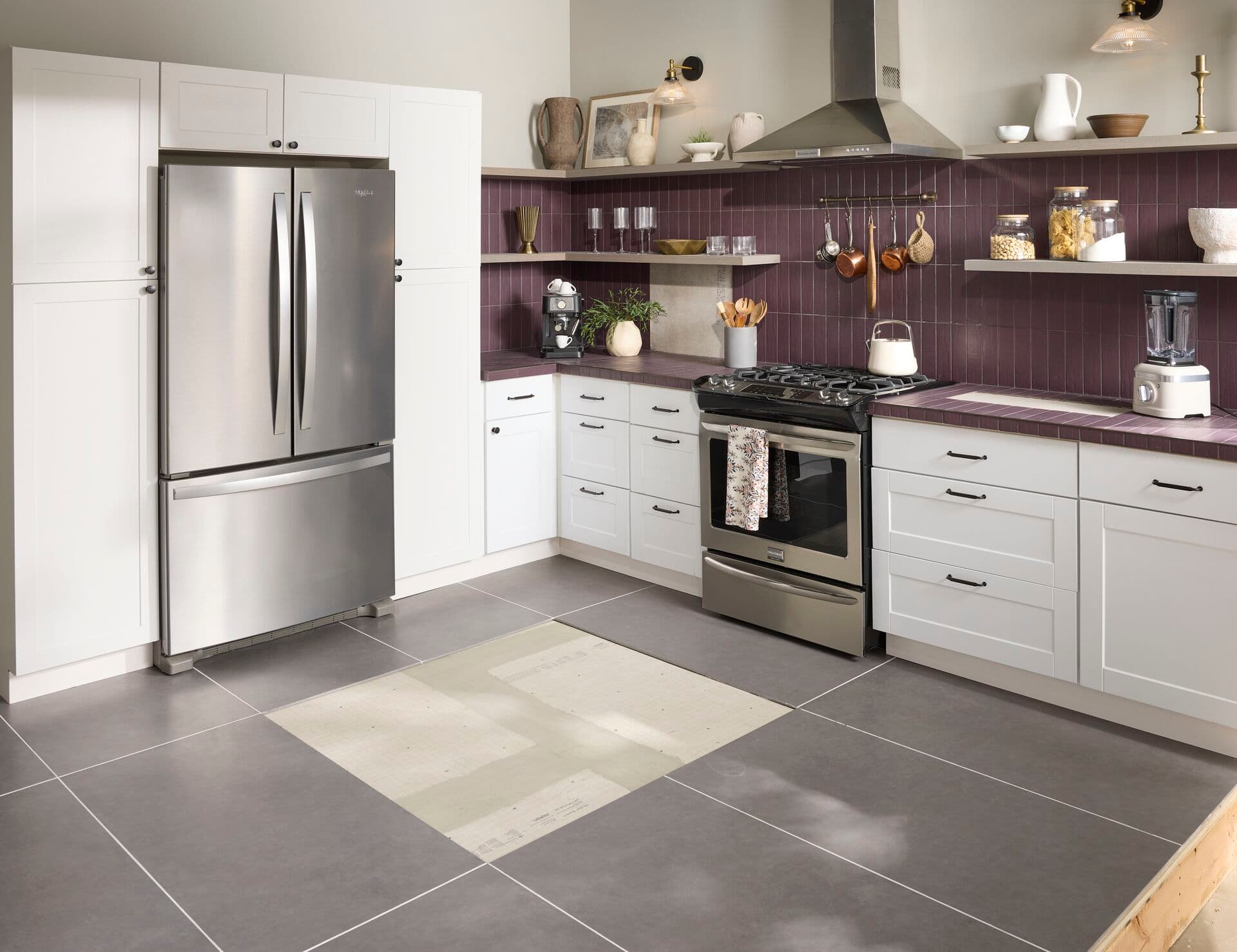
Kitchens face constant spills, heat, and daily traffic. The right underlayment protects your tile investment in this high-use space.
Backsplash installation
Use 0.42-inch Hardie® Backer Board behind sinks and cooktops. The thicker board provides stability for wall tile that faces regular steam and splash exposure.
Countertops and floors
Use 0.25-inch Hardie® Backer Board for:
- Tile countertops and kitchen islands
- Waterfall-style countertop edges
- Floor tile throughout the kitchen
Bathroom backer board applications
Bathrooms experience the most consistent moisture exposure in any home. Using water-resistant backer board is essential — but remember, wet areas need waterproofing too.
Shower walls and tub surrounds
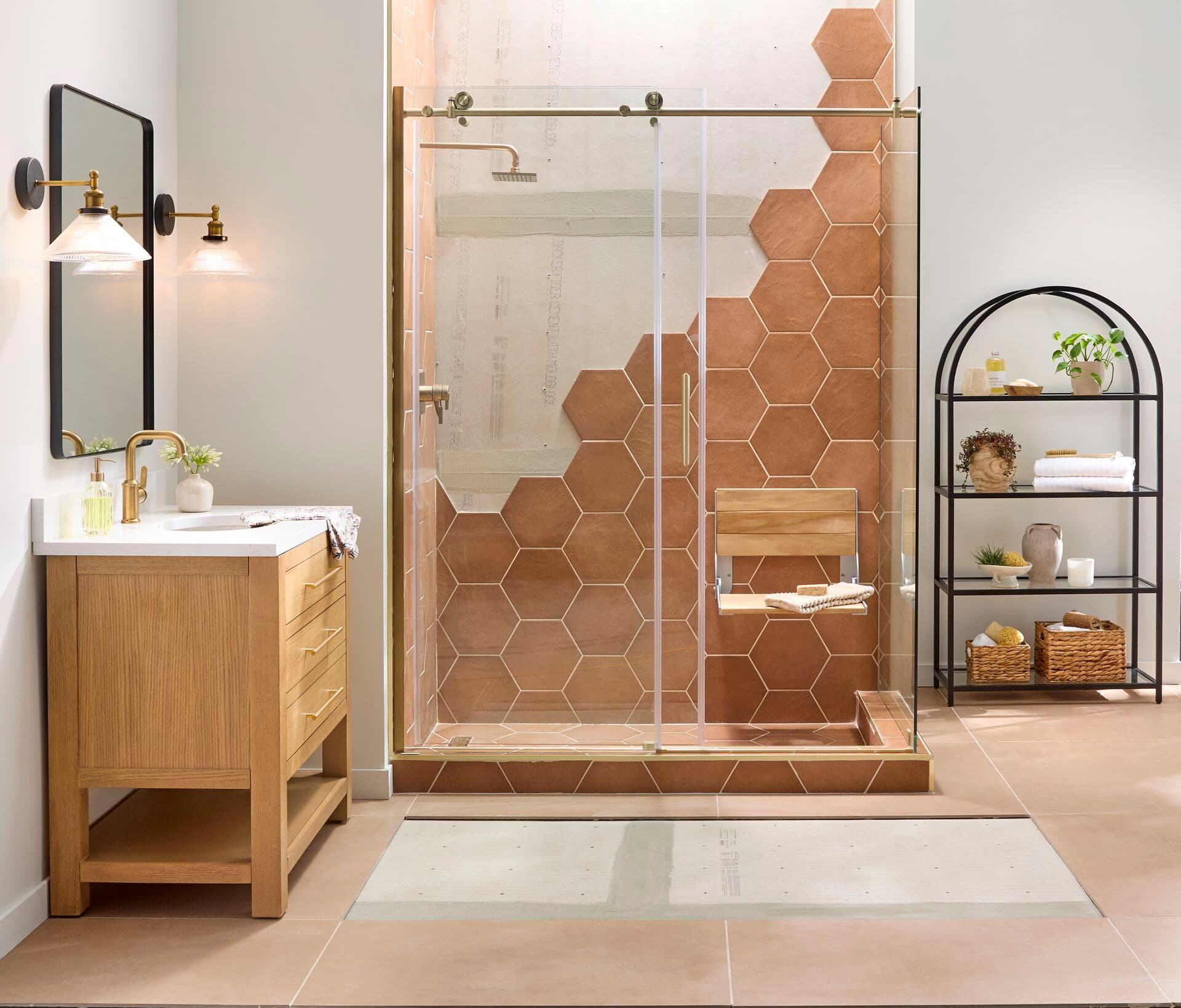
Use 0.42-inch Hardie® Backer Board plus a waterproofing membrane. The backer board provides structural stability that prevents warping, while the membrane creates the waterproof barrier your wall framing needs.
Bathroom floors
Use 0.25-inch Hardie® Backer Board beneath floor tile. Ideal for:
- Primary bathrooms with daily heavy use
- Spa-style bathrooms
- Steam showers (with appropriate waterproofing)
- Custom features like tiled benches and niches
Laundry room applications
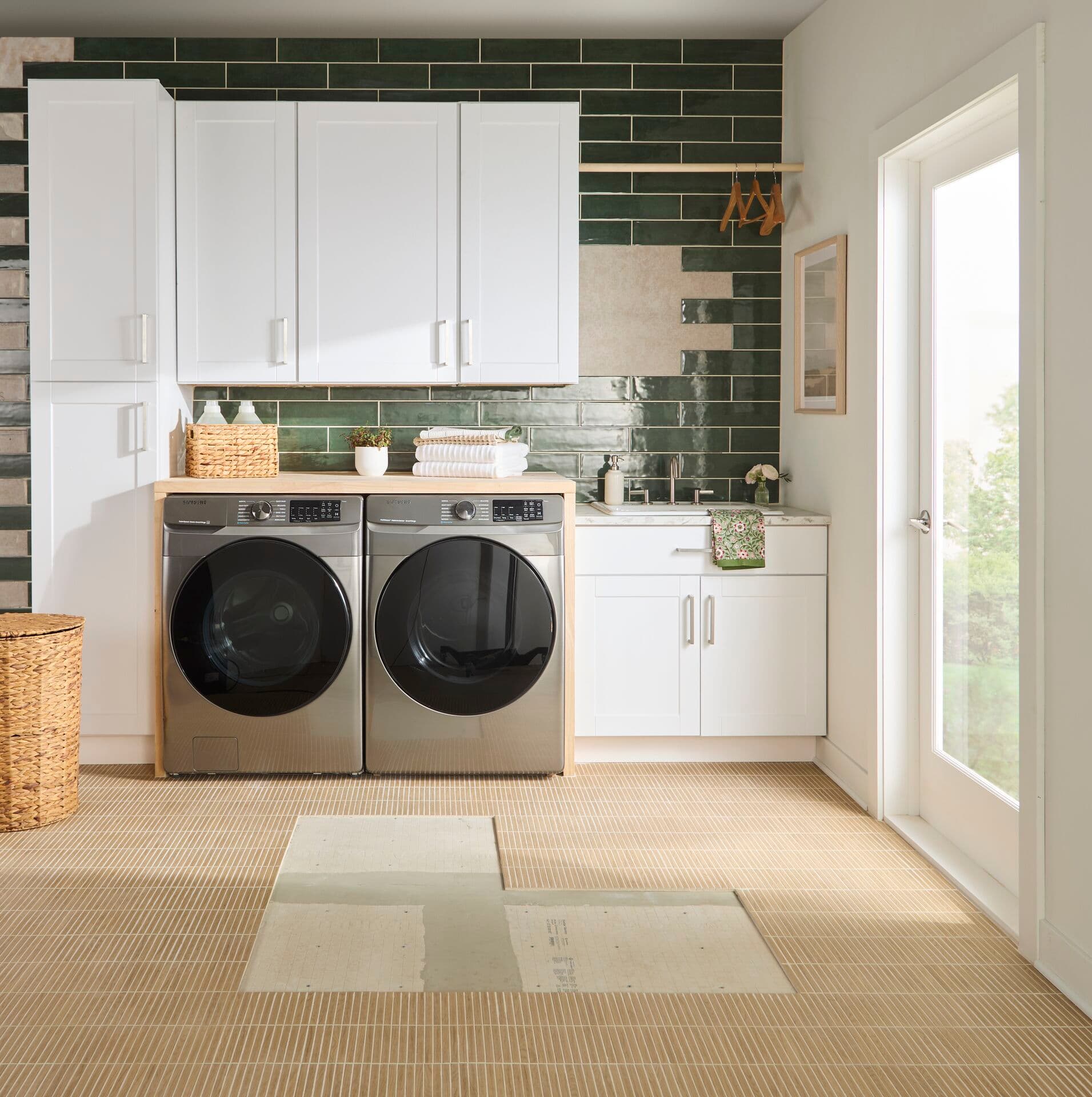
Laundry rooms deal with appliance vibration, detergent spills, and occasional leaks. Cement backer board keeps tile secure under these conditions.
Backsplash and countertops
Use 0.42-inch Hardie® Backer Board behind utility sinks and folding surfaces.
Floors
Use 0.25-inch Hardie® Backer Board to handle:
- Washer and dryer vibration
- Cleaning product spills
- Frequent mopping
Mudroom applications
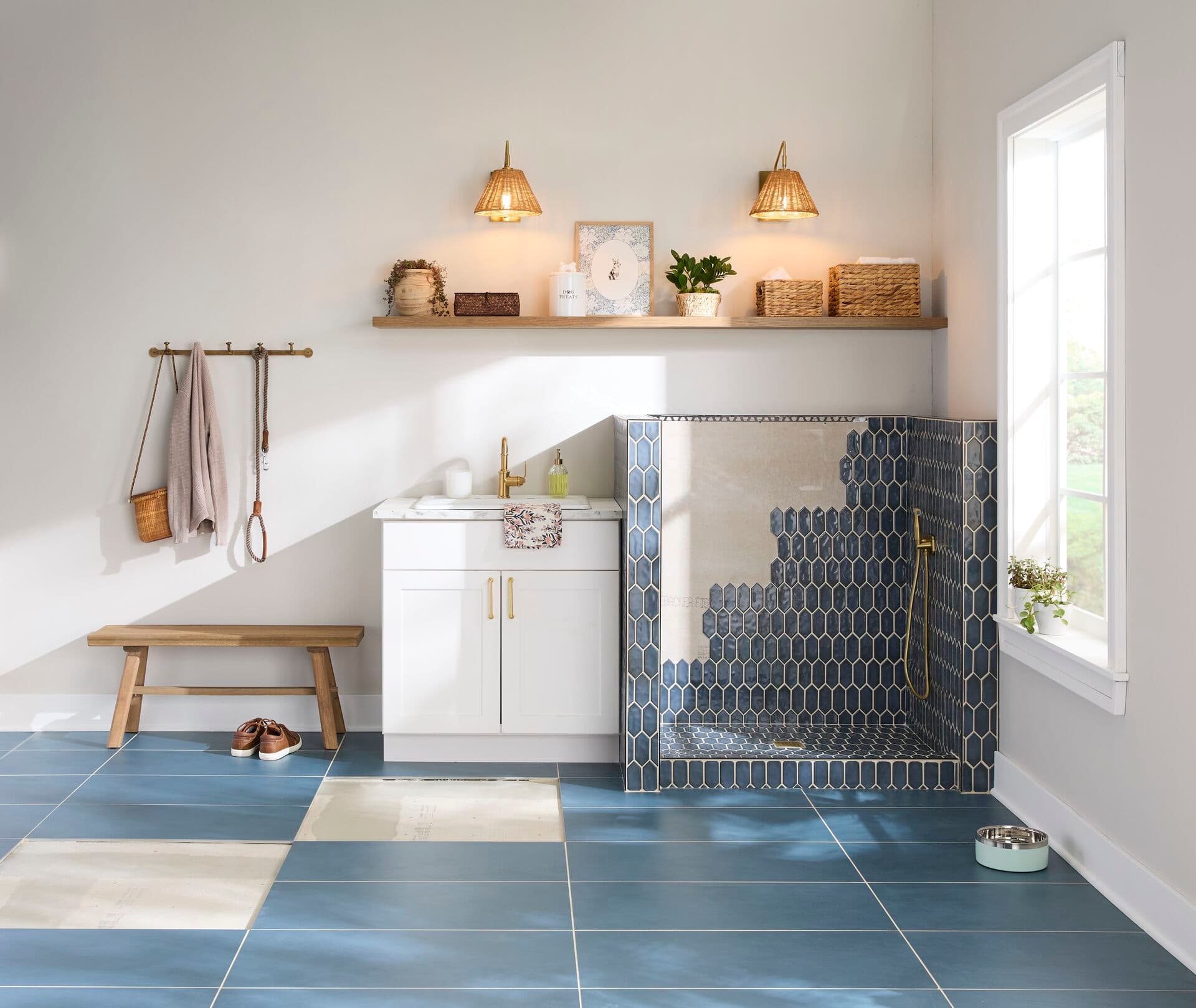
Mudrooms endure tracked-in grit, melting snow, and seasonal moisture fluctuations. Quality tile underlayment provides the foundation tile needs under tough conditions.
Floor installation
Use 0.25-inch Hardie® Backer Board for entry areas that manage:
- Wet boots and umbrellas
- Winter gear storage and snowmelt
- High daily foot traffic
Build on a strong foundation
Every tile installation starts with what lies beneath. Hardie® Backer Board delivers the strength, water resistance, and long-term performance you need — whether you're updating a kitchen backsplash or building out a custom shower.
Choose the right thickness for your application, follow proper installation practices, and add waterproofing where moisture demands it. The result: tile work that looks great and lasts for years.
Ready to start your project? Use the James Hardie Dealer Locator to find retailers near you.
Frequently Asked Questions
Is cement board waterproof?
No. Cement board is water-resistant, meaning it slows moisture penetration and doesn't deteriorate when wet. Showers and other continuously wet areas require a waterproofing membrane in addition to cement backer board.
What thickness backer board should I use?
Use 0.25-inch backer board for floors and countertops where minimal height buildup matters. Use 0.42-inch backer board for walls, backsplashes, and shower surrounds where added rigidity improves tile adhesion.
Can I install backer board myself?
Yes. Hardie® Backer Board is designed for DIY installation. The EZ Grid® pattern provides built-in fastener guides, and the board can be cut by scoring and snapping or with standard power tools. Follow the manufacturer's installation instructions for best results.
Why can't I tile directly over drywall in a bathroom?
Drywall absorbs moisture and breaks down when exposed to water. Even moisture-resistant drywall isn't rated for direct water contact. Cement backer board provides the durability and water resistance bathroom tile requires.
